
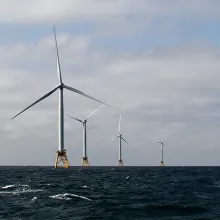
Offshore wind farms can be an energy boon, but does their noisy construction bother marine animals? UMD’s Arthur Popper, who studies underwater sounds and their ecological impacts, weighs in.

Computer Science Associate Professor
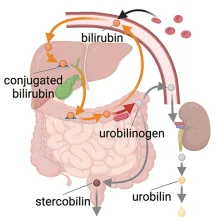
Their findings could be applied to future studies of gut health, including conditions like jaundice and inflammatory bowel disease.

2023 has been a year full of discovery for the College of Computer, Mathematical, and Natural Sciences (CMNS).

More than 600 students are graduating from CMNS with undergraduate, graduate or professional studies degrees.
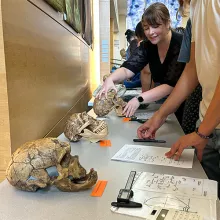
The undergraduate class teaches students that humans are more genetically alike than different.
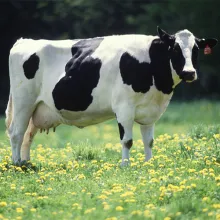
Atmospheric methane—a potent greenhouse gas—has surged since 2007. Figuring out where it’s coming from could help mitigate climate change.

He will receive $150,000 over three years to support his collaborative research with the University of Maryland, Baltimore.
A research team led by University of Maryland neuroscientists used artificial neural networks to uncover how cells in the visual cortex interpret light signals from the retina and translate that data into vision.
Study co-authored by Biology Professor Joshua Weitz found intricate ecological networks emerge from simple beginnings that feature repeating patterns of evolutionary development.