
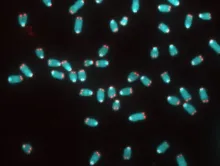
UMD researchers discovered that telomerase, which “immortalizes” cancer cells, also prevents tumors and slows a key stage in normal cell death.

Accessible to all UMD researchers, students and collaborators, the new microscope will provide higher resolution and more speed while being gentler on live samples.
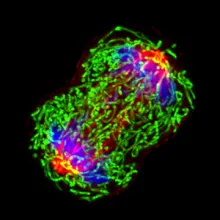
Researchers at the University of Maryland and National Cancer Institute identified 12 distinct relationships between gene pairs in tumor cells that could potentially be targeted for cancer therapy.
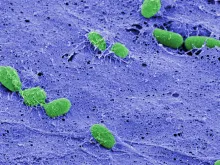
University of Maryland researchers discovered one enzyme’s vital role in breaking down RNA is more specific than previously thought, revising a vital cellular process misunderstood since the 1960s.

New research suggests that global trends in farming practices are undermining the pollinators crops depend on and putting agricultural productivity and stability at risk, particularly in some Asian and South American nations.

Losert will serve in this role while a national search is conducted.

Professor Michael Cummings Named Director of the Center for Bioinformatics and Computational Biology
As director, Cummings will guide a diverse community of faculty, research scientists, postdocs and students who are focused on questions arising from the genome revolution.
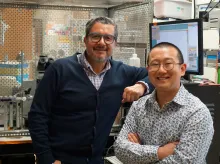
They discuss their eNeuro publication that examined the hyperpolarization-activated current in granule cells, the predominant type of inhibitory neuron in the olfactory bulb. The authors showed that granule cells exhibit a hyperpolarization-activated current-dependent subthreshold resonance in the theta frequency range (4–12 Hz).
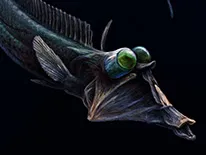
New research reveals signs of highly sensitive color vision in fish that live in the abyss beyond sunlight’s reach.

Ten stories—one from each of our departments—highlight some of the most exciting scientific discoveries made by faculty members in the college during the last half-century.