
Awardees include two current undergraduate students and eight recent alumni, one of whom is a current CMNS graduate student.

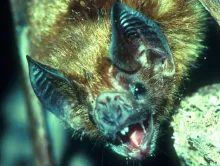
UMD biologists found four bat lineages that live at least four times longer than similar-sized mammals and revealed new traits associated with bat longevity.

When a UMD researcher was asked to comment on an important finding, he turned to a staff member in the college’s dean’s office for a humorous illustration to liven up his message.
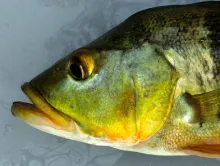
UMD biologists discover how the peacock bass adapts to murky and clear water, possibly aiding in its invasion success.

A survey of research on aquatic noise pollution reveals huge gap in knowledge about impacts of human-generated noise in aquatic environments.
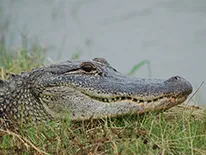
UMD biologist finds alligators map sound the way birds do, suggesting the hearing strategy existed in their common ancestor and dinosaurs.
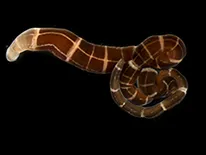
New study reveals regeneration of amputated body parts is not always an ancient trait and scientists might need to rethink the way they compare animals with regenerative abilities.
The alumni received graduate degrees from UMD in astronomy, biology, chemistry, computer science, mathematics and physics.
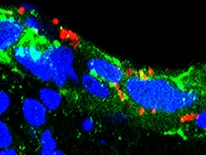
Wenxia Song and her collaborators identified two molecules that inhibit gonorrhea infection in a laboratory tissue model.
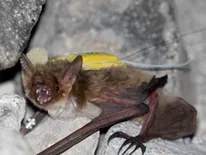
Using miniature sensors strapped to bats, researchers tracked the animals’ locations and calls to determine whether they searched for food alone or with others.