Molecular & Cellular Biology (MOCB)
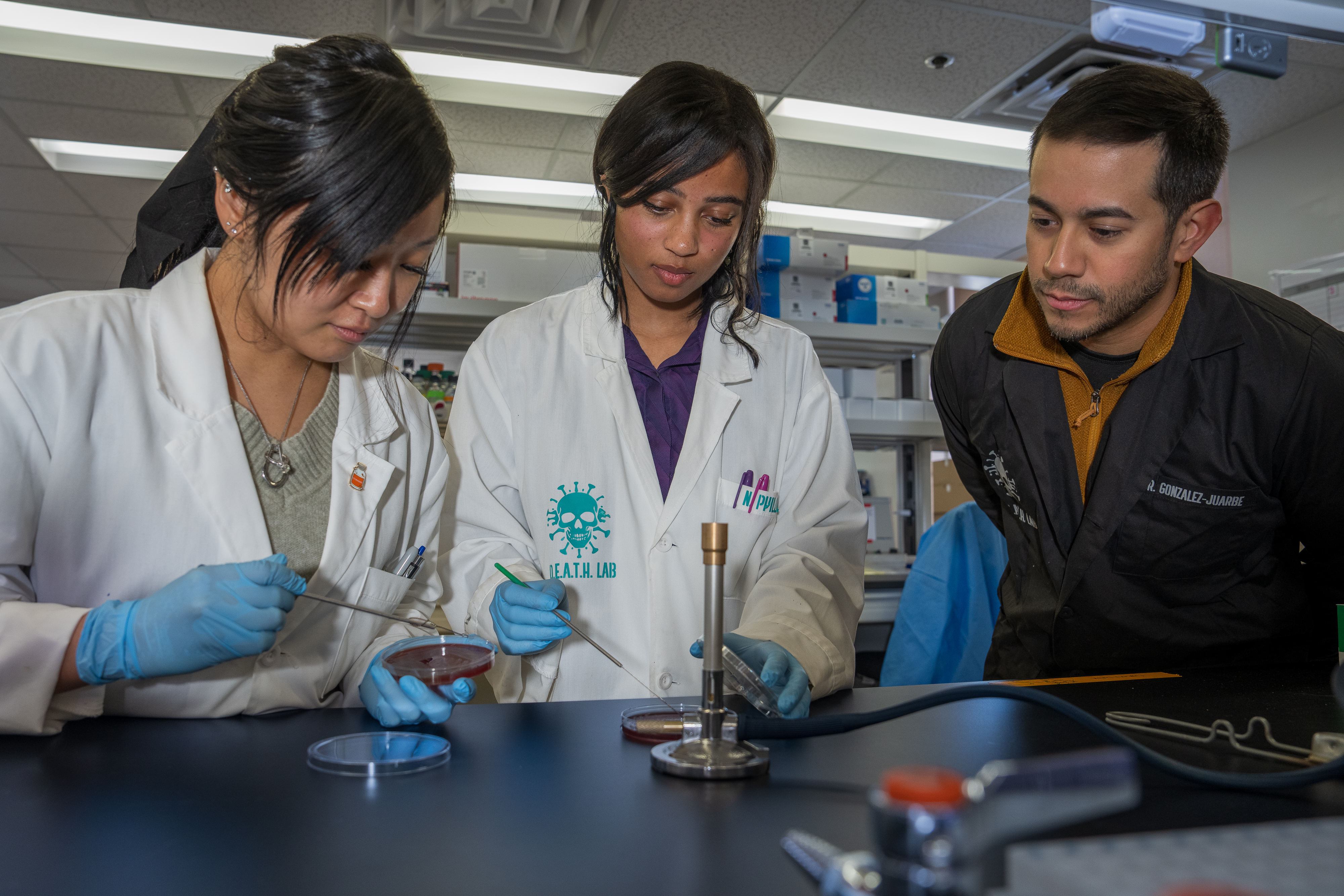
The MOCB concentration area offers highly mentored graduate training with faculty interested in a broad spectrum of research focused on understanding the molecular nature of biology. Our faculty members have expertise in state-of-the-art technologies, have national and international reputations, and publish in high impact journals. MOCB students receive a core curriculum that emphasizes knowledge in the areas of molecular genetics, nucleic acid biochemistry, cell biology, and structural biology. In addition, a number of interdisciplinary research clusters are available focusing on host-pathogen interactions, plant systems, developmental biology, virology, genomics, biophysics, and more. The overall goal of MOCB is to provide our students with rigorous and comprehensive research training that will lead to a successful career in the biosciences.
The MOCB Concentration Area Director is Dr. Jiqiang “Lanny” Ling.
Note: Training with an off-campus affiliate/adjunct faculty member requires an on-campus co-advisor. Emeriti faculty members can serve on committees, but not as the primary or co-mentor.
Areas of Interest
Students who choose the Molecular and Cellular Biology (MOCB) concentration area pursue research that reaches across a multitude of fields, including:
- Biochemistry and Biophysics
- Bioinformatics
- Genetics and Genomics
- Microbiology, Microbial Pathogenesis, and Immunology
- Plant Systems: Cell Biology and Genomics
Research Clusters
Students may join a research cluster once on campus and are encouraged to explore the examples listed below to better understand potential opportunities:
- Center for Comparative and Evolutionary Biology of Hearing (C-CEBH)
- Developmental Biology
- Host-Pathogen Interactions
- Plant Systems: Cell Biology and Genomics
- Quantitative Biology
Special Training Opportunities
The MOCB Concentration area administers a training grant funded by the National Institutes of Health.
- Host Pathogen Interaction Training Program: PIs: Dr. Kevin McIver & Dr. David Mosser
Students can apply to be part of this training after their first year; however, in some cases, exceptional students are offered training grant positions upon entering the program.
Affiliates
- College of Computer, Mathematical, and Natural Sciences (CMNS)
- College of Agriculture and Natural Resources (AGNR)
- Food and Drug Administration Laboratories (FDA)
- J. Craig Venter Institute (JCVI)
- National Institutes of Health (NIH)
- Smithsonian Institution Museum of Natural History (NMNH)
- USDA Beltsville Agricultural Research Center
- Maryland Pathogen Research Institute (MPRI)
- Center for Bioinformatics and Computational Biology (CBCB)
I get to see so many different ways of applying plant science while at UMD. Whether I end up in academia or industry after completing my Ph.D. program here, I know I want to be at the forefront of discovery, pushing beyond what we now know about plants.
Priyanka Bharadwaj
BISI Ph.D. Student