Computational Biology, Bioinformatics, & Genomics (CBBG)
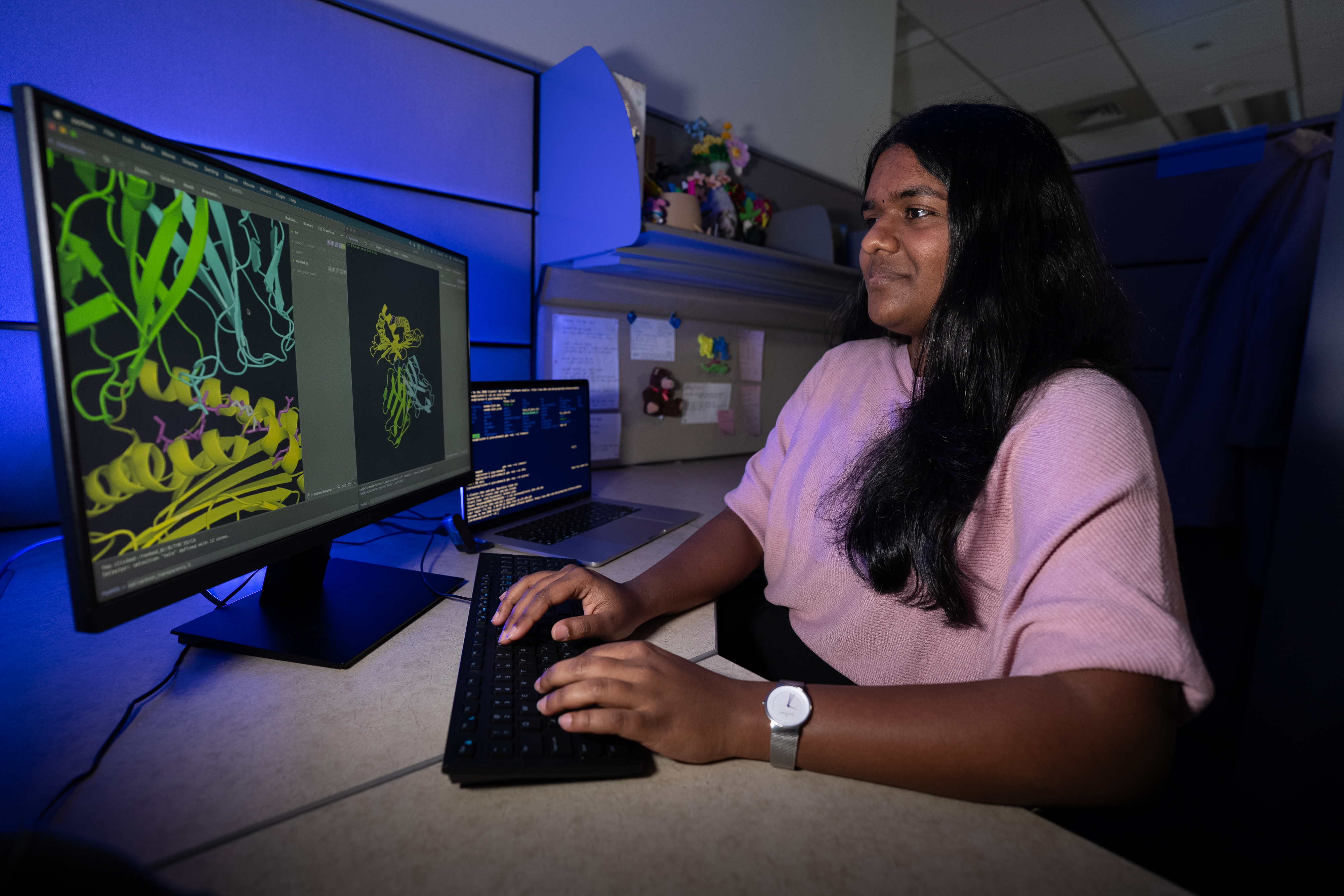
Major advances in experimental and computational methods have greatly expanded the scope and size of biological datasets, as well as the capabilities and potential of computational tools to utilize them. Graduate students in the Computational Biology, Bioinformatics, and Genomics (CBBG) BISI concentration area develop and apply cutting-edge computational approaches to understand, predict, and design biological systems at scales ranging from molecules to organisms to populations. With over 40 faculty spanning biology, computer science, biochemistry, bioengineering, and related fields, CBBG provides rigorous quantitative training in a highly collaborative research environment.
The CBBG Concentration Area Director is Dr. Brian Pierce. Email CBBG
Note: Training with an off-campus affiliate/adjunct faculty member requires an on-campus co-advisor. Emeriti faculty members can serve on committees, but not as the primary or co-mentor.
Research & Training Areas
- Genomics and gene regulation
- Metagenomics and microbiomes
- Evolution and population genetics
- Pathogens, viruses, and human disease
- Cancer and immunology
- Single-cell and spatial omics
- Algorithms, databases, and software
- Machine learning and AI
- Structural biology and protein design
Community & Resources
CBBG activities include research-in-progress seminars by students, a monthly computational biology journal club, and an annual retreat. Students engage with affiliated faculty and collaborators on campus and across the region (e.g., NIH, FDA, NIST, and the University of Maryland School of Medicine) and have access to robust computational resources, including high-performance computing facilities on campus and at participating institutes. Thanks to UMD's location in the Washington–Baltimore corridor, CBBG students benefit from proximity to major federal research institutes and a strong biotechnology presence, supporting internships, collaborations, and diverse career pathways.

It was in Brian [Pierce]'s lab that I got the training I needed in order to succeed in this field. When I first joined his lab, I knew virtually nothing about programming, and he was able to help me expand my knowledge and master state-of-the-art techniques. His lab is world-class, and being able to do research there gave me a front-row seat to observe what's happening in this field. I was very fortunate to be part of that.
Rui Yin (Ph.D. '24, Biological Sciences)
Senior AI Scientist & Group Lead at Absci