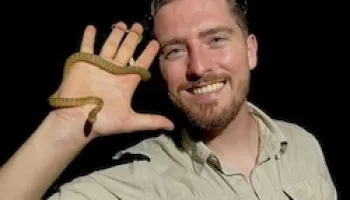
Nicholas Rachmaninoff (Ph.D. ’23, biological sciences) found his passion in the data-driven analysis of the immune system, using math and code to understand how the body fights disease.
Nicholas Rachmaninoff (Ph.D. ’23, biological sciences) has a very logical mind. But the path to his current role as a data scientist at GlaxoSmithKline, where he helps design vaccines and discover monoclonal antibodies (lab-made proteins designed to recognize and neutralize pathogens), was far from a straight line.
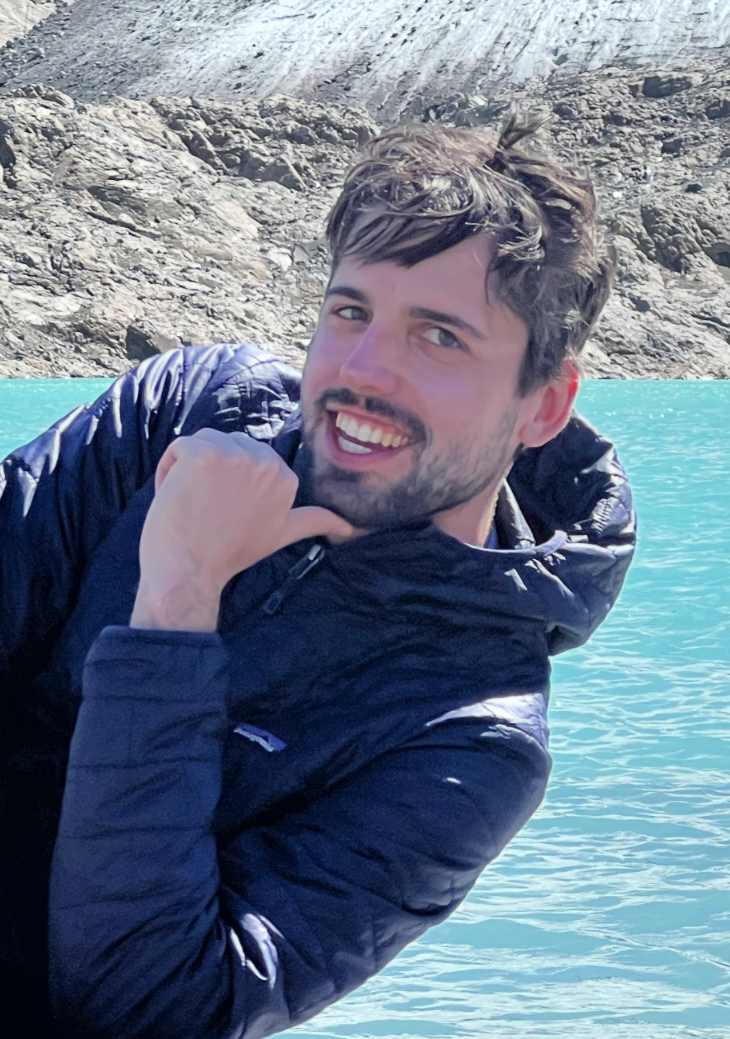
“As an undergrad at the University of Michigan, I worked in a wet lab and spent a lot of time at the microscope,” he said. “I found cell biology quite interesting, but I didn’t love being in the lab.”
Following two years working as a paralegal on biotech patent applications, he eventually landed in College Park for graduate school. He was drawn to the University of Maryland’s strengths in biology, mathematics and computer science, as well as a graduate program with a concentration area in computational biology, bioinformatics and genomics designed to bridge them.
He rotated through a couple of labs, including one exploring cancer genomics. The research intrigued him, but without much programming experience, the early months of his program were challenging.
“It was a bit intimidating,” he admits. But through intensive study and hands-on problem-solving, he found his footing—and his direction.
Through a UMD partnership with the National Institutes of Health (NIH), Rachmaninoff landed a spot in a lab led by John Tsang at the National Institute of Allergy and Infectious Diseases. It was there where everything finally clicked into place, where his skills, passion, and logical thinking found purchase exploring whether patterns in gene activity—called transcriptional signatures—could predict how well someone would respond to vaccines and even whether similar patterns might predict success in cancer immunotherapy.
“I soon realized I had found my scientific home,” he said.
At the NIH, Rachmaninoff studied the immune system through large-scale data, work that took on new urgency during the COVID-19 pandemic. He contributed to studies examining why some patients develop severe disease while others recover quickly, and what drives strong responses to COVID-19 vaccines.
Understanding immune individuality
At the same time, Rachmaninoff was conducting research at UMD with Associate Professor Philip Johnson in the Department of Biology.
“Philip’s lab was a really fun place to work,” he recalls. “He took this very interesting view that the principles of population genetics could apply to populations of microbes—or even immune cells—within the same individual.”
That perspective helped Rachmaninoff explore why people’s immune systems react so differently to the same infection or vaccine. He studied children in Nicaragua using longitudinal data and statistical models to measure what he calls “gene expression individuality.”
At its core, the idea is simple: while people inherit largely the same set of genes, how active those genes are can vary widely depending on genetics, environment, past infections and other factors. Understanding those differences could help scientists better predict a patient’s immune response.
Rachmaninoff’s experience also broadened his scientific perspective.
“I enjoyed being exposed to people studying everything from immunology in birds to CRISPR evolution in bacteria,” he said. “It was mind-expanding and a lot of fun.”
Dare to explore
Today, at GlaxoSmithKline, Rachmaninoff conducts exploratory research using tools like immune repertoire sequencing, which catalogs the vast diversity of antibodies the body can produce. The goal is to identify new antibodies that could be used in vaccines or as therapies to prevent infection.
Outside of work, Rachmaninoff is happy to break for squash, hiking and drumming with friends. He and fellow vaccine scientists even started a band called the Prevention, a tongue-in-cheek nod to both their work and the 1980s band the Cure.
Thinking about his own path, Rachmaninoff encourages current and prospective graduate students to let their education be an exploration.
“I remember early on I felt very anxious about picking a lab and starting right away, and I put too much pressure on myself,” he said. “I think I missed out on some experiences as a result.”
His advice: “Slow down and enjoy the process, take your time. And take advantage of the environment around you.”
With access to so many kinds of scientists, plus the proximity to institutions like NIH and other federal agencies, “there are so many opportunities at UMD,” he said. “You just have to look for them.”