
Alexander Xu
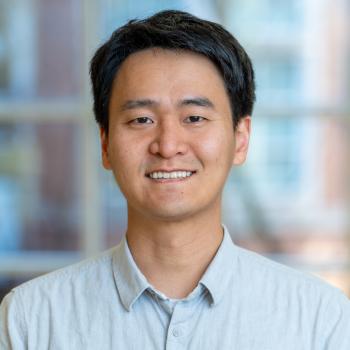
Alexander Xu
My group studies spatial biology using highly multiplexed, spatially-resolved tools for molecular analysis in tissue. We use 40+ protein spatial analysis and spatial transcriptomics to study the cellular architecture of cancer and other diseases, make predictions for patient outcomes and treatment responses using spatial biomarkers, and propose novel therapeutics. Our work is highly interdisciplinary, leading to my association with BISI CBBG as well as the good people of Biophysics, Applied Math and Statistics, and UMIACS here at UMD, as well as the Department of Pathology, the Program in Oncology, and the Institute for Genome Sciences at the University of Maryland Baltimore.
I studied Mathematics and Materials Science at MIT before receiving my Ph.D. in Materials Science and Engineering at Stanford with Nick Melosh. I did my postdoc with Jim Heath at Caltech and the Institute for Systems Biology, and I was an Instructor with Akil Merchant at Cedars-Sinai Medical Center before joining UMD in 2024.
Latest Papers
Supplemental Figure S12 from HIV and Antiretroviral Therapy Influence Tumor Microenvironment Architecture, Subclonal Evolution, and Immune Evasion Strategies in Diffuse Large B-cell Lymphoma
Author(s): Jenny Coelho, Sophia M. Roush, Samantha Beck, et. al
UMD Author(s): Alexander Xu
Table 1 from HIV and Antiretroviral Therapy Influence Tumor Microenvironment Architecture, Subclonal Evolution, and Immune Evasion Strategies in Diffuse Large B-cell Lymphoma
Author(s): Jenny Coelho, Sophia M. Roush, Samantha Beck, et. al
UMD Author(s): Alexander Xu
Figure 3 from HIV and Antiretroviral Therapy Influence Tumor Microenvironment Architecture, Subclonal Evolution, and Immune Evasion Strategies in Diffuse Large B-cell Lymphoma
Author(s): Jenny Coelho, Sophia M. Roush, Samantha Beck, et. al
UMD Author(s): Alexander Xu
Supplemental Figure S9 from HIV and Antiretroviral Therapy Influence Tumor Microenvironment Architecture, Subclonal Evolution, and Immune Evasion Strategies in Diffuse Large B-cell Lymphoma
Author(s): Jenny Coelho, Sophia M. Roush, Samantha Beck, et. al
UMD Author(s): Alexander Xu
Supplemental Figure S4 from HIV and Antiretroviral Therapy Influence Tumor Microenvironment Architecture, Subclonal Evolution, and Immune Evasion Strategies in Diffuse Large B-cell Lymphoma
Author(s): Jenny Coelho, Sophia M. Roush, Samantha Beck, et. al
UMD Author(s): Alexander Xu
Supplemental Figure S13 from HIV and Antiretroviral Therapy Influence Tumor Microenvironment Architecture, Subclonal Evolution, and Immune Evasion Strategies in Diffuse Large B-cell Lymphoma
Author(s): Jenny Coelho, Sophia M. Roush, Samantha Beck, et. al
UMD Author(s): Alexander Xu
Figure 4 from HIV and Antiretroviral Therapy Influence Tumor Microenvironment Architecture, Subclonal Evolution, and Immune Evasion Strategies in Diffuse Large B-cell Lymphoma
Author(s): Jenny Coelho, Sophia M. Roush, Samantha Beck, et. al
UMD Author(s): Alexander Xu
Supplemental File 1 from HIV and Antiretroviral Therapy Influence Tumor Microenvironment Architecture, Subclonal Evolution, and Immune Evasion Strategies in Diffuse Large B-cell Lymphoma
Author(s): Jenny Coelho, Sophia M. Roush, Samantha Beck, et. al
UMD Author(s): Alexander Xu
Supplemental Figure S5 from HIV and Antiretroviral Therapy Influence Tumor Microenvironment Architecture, Subclonal Evolution, and Immune Evasion Strategies in Diffuse Large B-cell Lymphoma
Author(s): Jenny Coelho, Sophia M. Roush, Samantha Beck, et. al
UMD Author(s): Alexander Xu
Supplemental Figure S14 from HIV and Antiretroviral Therapy Influence Tumor Microenvironment Architecture, Subclonal Evolution, and Immune Evasion Strategies in Diffuse Large B-cell Lymphoma
Author(s): Jenny Coelho, Sophia M. Roush, Samantha Beck, et. al
UMD Author(s): Alexander Xu