Julia Van Etten
Julia Van Etten
Start Date
August 2026
Graduate Program Affiliations
- Biological Sciences (BISI): Behavior, Ecology, Evolution, and Systematics (BEES)
- Biological Sciences (BISI): Computational Biology, Bioinformatics, and Genomics (CBBG)
- Biological Sciences (BISI): Molecular and Cell Biology (MOCB)
Research Interests
The goal of my research program is to understand how horizontal processes like DNA transfer and organellogenesis arise from ecological interactions and create new ones, and how this affects evolutionary outcomes across microbial communities. The “tree of life” is a generally bifurcating scheme for understanding descent and ancestry of extant taxa. Much of the data within genomes is transferred vertically from parent to offspring, but sometimes nucleic acids incorporate horizontally, within a generation, into new genomes and may be subsequently passed down vertically (if permitted by selection or drift). This creates a tree of life that appears web-like at finer resolution. The transfers that build this web can range from bits of non-coding DNA to whole operons and chromosomes to organisms themselves (that become organelles). What DNA gets moved around in nature is largely dependent on transfer mechanism, however, not a lot of work has been done to understand the breadth and variety of these mechanisms or to build programs and pipelines that discern between them when doing studies of horizontal transfer. In my research group, we use both experimental wetlab and computational approaches to better characterize the mobility of DNA between taxa across ecosystems.
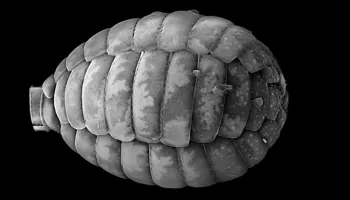
I am also passionate about coupling traditional, naturalist-style exploration and microscopy with genomics to identify and describe novel microbial species, particularly protists. One example of a project that has blossomed from this approach is a novel Paulinella species we are working to describe, sequence, and grow in the lab. Photosynthetic Paulinella are a clade of low abundance rhizarian amoebas that acquired a recent (100 million years ago) primary photosynthetic organelle from a cyanobacterial endosymbiont, switching their metabolism from heterotrophy to autotrophy. This is analogous to the unique primary endosymbiotic event that created the Archaeplastida lineage (algae and land plants) over one billion years ago. Because the Paulinella event is much more recent and the organelle is still integrating with host cell biology, we can use this organism and its habitat as models for understanding how these types of major evolutionary transitions occur genomically and ecologically. Who knows what other fundamental questions in biology we’ll be able to address by finding new species!
Latest Papers
Crawling under the radar: Two novel Paulinella species expand knowledge about the ecology and evolution of a primary plastid‐containing amoeba lineage
|
Journal of Phycology
Author(s): Julia Van Etten, Sungpil Han, John A. Burns, et. al
UMD Author(s): Julia Van Etten
The ecology of horizontal gene transfer
|
Trends in Genetics
Author(s): Julia Van Etten, Matthew D. Johnson
UMD Author(s): Julia Van Etten
Fascinating single‐cell red algae: models for evolution and adaptation
|
New Phytologist
Author(s): Frédéric Berger, Debashish Bhattacharya, Chung Hyun Cho, et. al
UMD Author(s): Julia Van Etten
Beyond Adaptive Gene Transfers: A Primer on Horizontal Gene Transfer Across Scales
|
Integrative and Comparative Biology
Author(s): Julia Van Etten, Matthew Johnson
UMD Author(s): Julia Van Etten
Gene transfer drives community cooperation in geothermal habitats
|
Trends in Microbiology
Author(s): Debashish Bhattacharya, Julia Van Etten, Gabriella Panayotakis, et. al
UMD Author(s): Julia Van Etten
Genetic Transfer in Action: Uncovering DNA Flow in an Extremophilic Microbial Community
|
Environmental Microbiology
Author(s): Julia Van Etten, Timothy G. Stephens, Debashish Bhattacharya
UMD Author(s): Julia Van Etten
Diverse fates of ancient horizontal gene transfers in extremophilic red algae
|
Environmental Microbiology
Author(s): Julia Van Etten, Timothy G. Stephens, Erin Chille, et. al
UMD Author(s): Julia Van Etten
Hot springs viruses at Yellowstone National Park have ancient origins and are adapted to thermophilic hosts
|
Communications Biology
Author(s): L. Felipe Benites, Timothy G. Stephens, Julia Van Etten, et. al
UMD Author(s): Julia Van Etten
DNA transfer as a driver of eukaryote genome evolution
Author(s): Julia Van Etten
UMD Author(s): Julia Van Etten
A k-mer-Based Approach for Phylogenetic Classification of Taxa in Environmental Genomic Data
|
Systematic Biology
Author(s): Julia Van Etten, Timothy G Stephens, Debashish Bhattacharya
UMD Author(s): Julia Van Etten