Scott Juntti

Scott Juntti
Biography
I was born and raised in Minnesota, and obtained my B.S. degree at the University of Wisconsin-Madison. I earned my Ph.D. at the University of California, San Francisco studying behavioral neuroendocrinology, then did my postdoctoral training at Stanford University in the lab of Russ Fernald. There I combined my interests in molecular biology, neuroscience, behavior, and evolution studying circuits for reproductive behaviors in cichlid fish.
Graduate Program Affiliations
- Biological Sciences (BISI): Behavior, Ecology, Evolution, and Systematics (BEES)
Research Interests
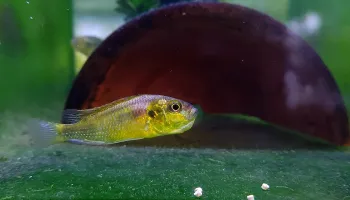
How does the brain produce social behaviors, and how do these evolve? The Juntti Lab opened at the University of Maryland in 2017, where we focus on essential yet variable behaviors including mating, aggression, and parenting. Our model system is the cichlid fish family, which contains over 2000 species, predominantly from the Rift Valley lakes of East Africa. These species are ideal models because they exhibit robust social behaviors in the lab and a tremendous variety of social systems, including monogamy or polygamy; parental care by females, males, or both; aggressive territoriality or relative gregariousness. They communicate via auditory, chemical, and visual means that differ across species. In fact, these cues are crucial for females as they choose a mate, and her selection of specific characteristics likely contributed to this explosive radiation of species. Hundreds of cichlid genomes have been sequenced, and we can manipulate these species by pharmacologic and genetic means (eg, CRISPR). Our ability to quantify behavioral changes enables us to causally link genotype to phenotype. Ultimately, this work will provide an understanding of how neural circuits function and evolve to generate diverse social behaviors.
Education
- B.S., University of Wisconsin-Madison
- Ph.D., University of California, San Francisco
- Postdoctoral Training, Stanford University
All Publications


Latest Papers
The neuroendocrine basis for parental care in teleost fish
|
Current Opinion in Neurobiology
Author(s): Gonçalo I. Andre, Scott A. Juntti
UMD Author(s): Scott Juntti
Cichlid fishes
|
Nature methods
UMD Author(s): Scott Juntti
A pheromone receptor in cichlid fish mediates attraction to females but inhibits male parental care
|
Current Biology
Author(s): Cheng-Yu Li, Jessica M. Bowers, Theresa A. Alexander, et. al
UMD Author(s): Scott Juntti
Genome editing in East African cichlids and tilapias: state-of-the-art and future directions
|
Open Biology
Author(s): Bethan Clark, Muktai Kuwalekar, Bettina Fischer, et. al
UMD Author(s): Scott Juntti
Neuroethology in The Age of Gene Editing: New Tools And Novel Insights into The Molecular And Neural Basis of Behavior
|
Integrative and Comparative Biology
Author(s): Beau A Alward, Scott A Juntti
UMD Author(s): Scott Juntti
Pheromone Perception in Fish: Mechanisms and Modulation by Internal Status
|
Integrative and Comparative Biology
Author(s): Jessica M Bowers, Cheng-Yu Li, Coltan G Parker, et. al
UMD Author(s): Scott Juntti
Cichlid genome modification - Malawi cichlids
|
protocols.io
Author(s): bethan_clark, Scott Juntti
UMD Author(s): Scott Juntti
Cichlid genome modification - Malawi cichlids v1
Author(s): Scott Juntti, Bethan Clark
UMD Author(s): Scott Juntti
Cichlid genome modification
|
protocols.io
UMD Author(s): Scott Juntti
Testing Wickler’s hypothesis: cichlids are unable to distinguish eggs from egg spots in the wild
|
Hydrobiologia
Author(s): Zeke M. Gonzalez, Scott A. Juntti, Karen L. Carleton
UMD Author(s): Karen Carleton, Scott Juntti