Biological sciences doctoral student Stephanie Chia uses informatics to determine why some animal forms fail to arise.
The bird world is a riot of different forms: Bodies, wings and tails of all sizes; beaks of varied shapes and thickness depending on their job; and so on. The possible trait combinations seem endless, but do they all exist? In any group of animals, are there evolutionary no-shows?
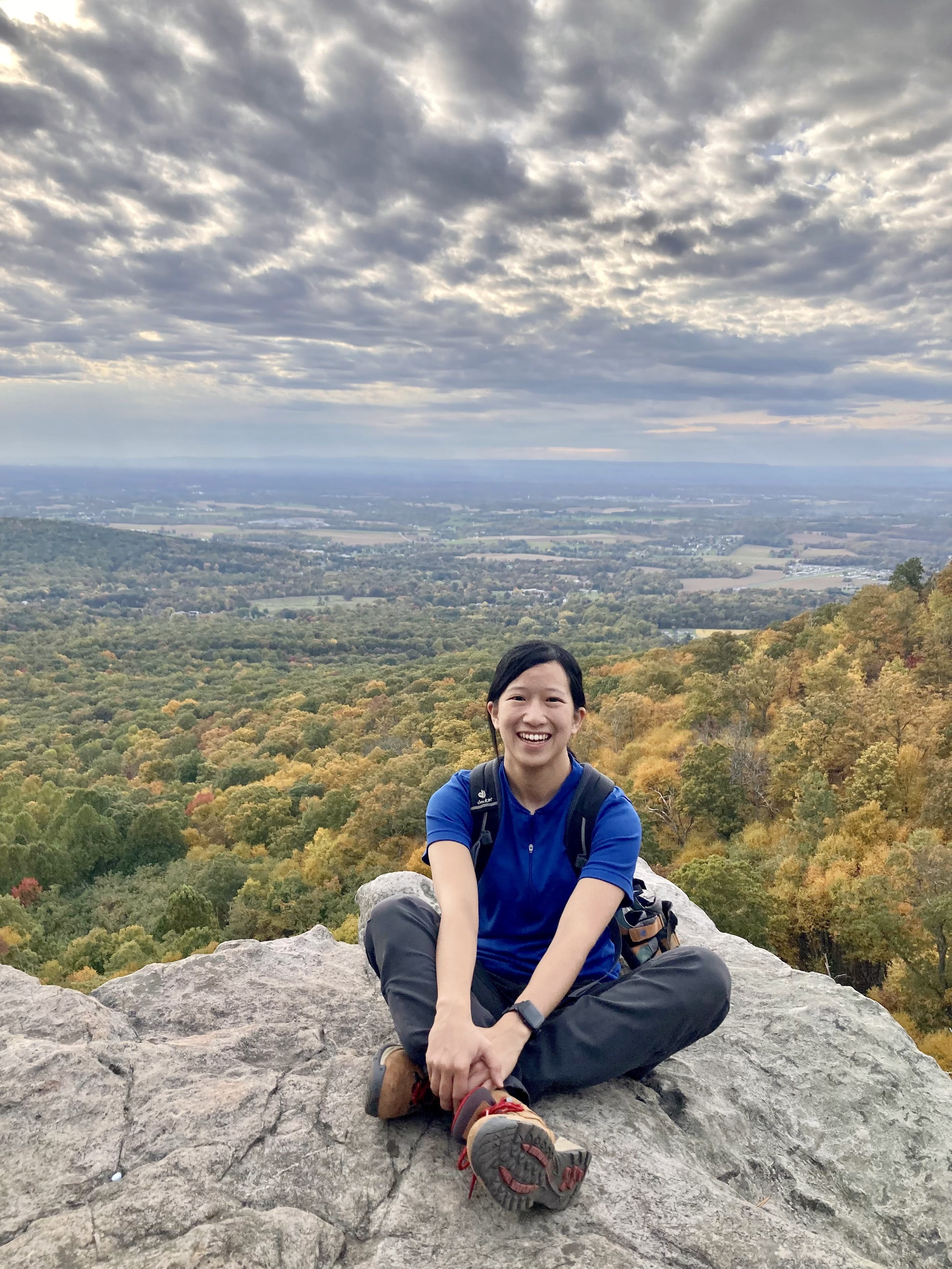
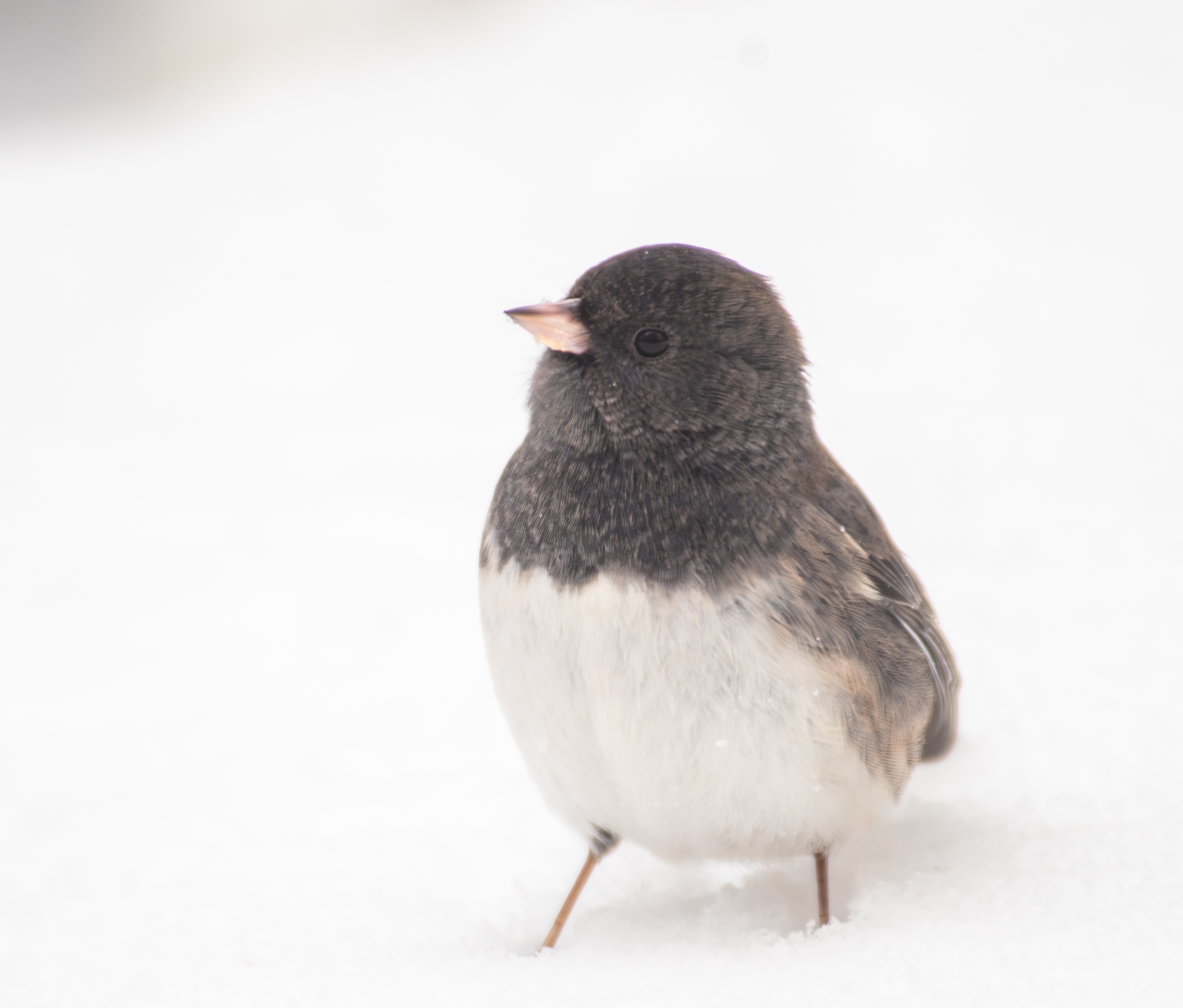
That’s what Stephanie Chia, a biological sciences doctoral candidate at the University of Maryland, wanted to know when she began investigating what she calls “evolutionary obstacles and missed morphologies” in birds. To solve the mystery, she turned to the Passeroidea, a superfamily of more than 1,300 songbird species representing about 15% of all birds on Earth.
“It’s a way to kind of back into the story of evolution. Rather than studying how a particular form arose, I applied a computational statistics tool to existing data that let me ask why a perfectly valid form never came about,” she said.
Working in the lab of Distinguished University Professor of Biology Bill Fagan, Chia looked for combinations of morphological features missing among the songbirds, with plans to derive possible explanations for any absences. Her first-author paper with the findings appeared in February in the journal Ecology Letters.
“What she did was unique,” Fagan said. “Instead of just looking at the boundaries of a system and asking what are its outer limits, Stephanie explored the interior of these multidimensional trait spaces looking for gaps in a very innovative and clever way.”
A bird-shaped hole
To search for missing forms, Chia sought advice from Mathematics Professor Lizhen Lin, who also directs the statistics program. Together, they used a computational method called ‘persistent homology,’ designed to find holes in complex data.
“I wanted to see if it would work well in the ecological trait context,” Chia said, “which I don’t think had been tried before.”
Chia mapped all the birds in this superfamily onto a multidimensional ‘trait space’ based on characteristics such as beak shape, wing shape, leg and tail lengths, and body mass. In this ‘morphospace,’ each species appears as a point defined by its shape.
The morphospace analyses revealed a large persistent gap where no passeroid birds exist.
The bird at the center of the gap is “actually an average-looking songbird with a relatively long tail and thin beak, probably an insect eater, nothing special,” Chia said. “I must admit I was imagining some weird-shaped thing that we’ve never seen before, but of course it makes perfect sense it would be very similar to the birds living around it.”
Chia came up with various hypotheses to explain the no-show birds and then worked toward the most likely scenario. The possibilities included that certain shapes simply don’t work well in nature; that a certain form hasn’t had enough time to evolve; and that birds from another family took that shape first, filling the ecological niche and forcing the passeroid birds to evolve another way to coexist.
It was the last option that ultimately best fit the bill.
"We used the birds' evolutionary history to estimate what their ancestors were like, and we were able to cross off all but that one hypothesis,” Chia said. “So, competitive exclusion is the most likely story.”
She pointed out that in this scenario, the 'missing’ bird isn't missing at all.
“It's not within this group, but it already exists," she said.
A natural career choice
Chia, a U.S. citizen, grew up in Taipei, Taiwan, and recalls escaping the crowded city for the surrounding mountains whenever possible for relief. As a high school student, she’d slide cut plant stems under the microscope “to admire how beautifully their cells were organized,” she said.
Appreciating the beauty of life forms led her to study biology as an undergraduate, with stints pursuing photography and architecture (also about form, it turns out). Ultimately, bringing together ecology with informatics at UMD has let her explore nature—everything from bird shapes and nests to water resources and environmental sustainability—in her own special way.
But it’s her novel application of persistent homology to ecology that stands out, as it provides a unique framework for uncovering structural gaps in other groups of organisms, according to Fagan.
“Biology is rich with complex datasets, and Stephanie successfully used a very powerful tool that I think we’ll see more of within organismal biology in the future,” he said.
Chia agrees.
“Evolution has explored many possibilities, but not every path is utilized,” she said. “Using these tools to understand why can tell us a lot about how life on Earth has taken shape.”