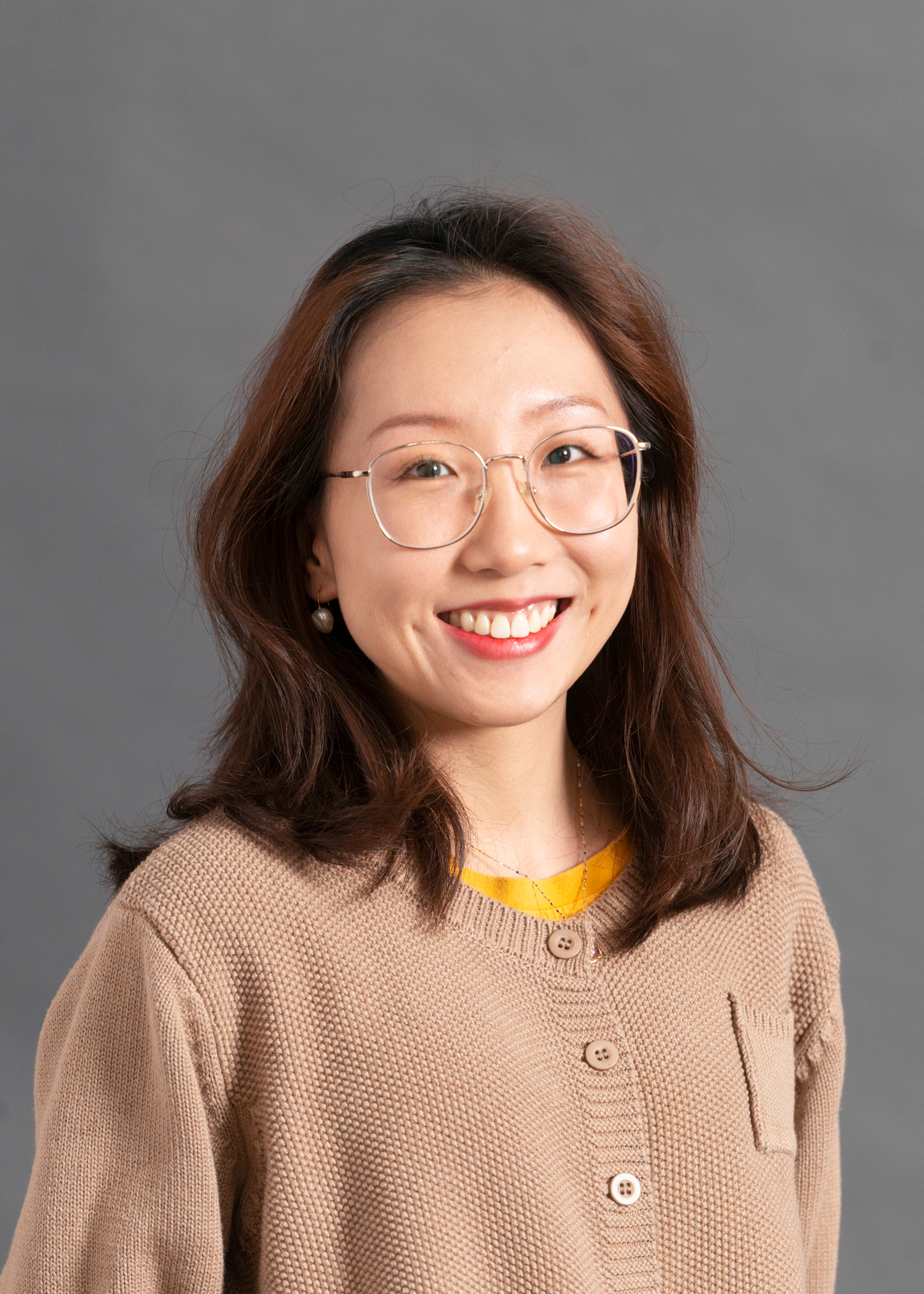
Jinyi “Cornelia” Zhu came to Maryland for the weather. She leaves with a B.S. in public health science, a Ph.D. in biological sciences, and gratitude for the freshman science program that started it all.
On May 19, Jinyi “Cornelia” Zhu (B.S. ’19, public health science) will slip on her doctoral regalia and walk across the Reckord Armory commencement stage at the University of Maryland with her fellow biological sciences Ph.D. graduates. Her achievement is extra meaningful because Zhu is the first-ever BioFIRE program participant to complete a Ph.D.
BioFIRE is a living-learning program that provides freshmen undergraduates with a cohort of peers who live and study together and a faculty-mentored research opportunity through UMD’s First-year Innovation and Research Experience (FIRE) program. Participants live in Somerset Hall, take foundational science courses together and choose from among the FIRE program’s science-research streams for their hands-on academic experience.
Zhu wasn’t familiar with BioFIRE when she applied to UMD; she comes from an area of Central China known for its torrid summers and admits she picked Maryland largely for the weather. (The alternative was Purdue.)
“My mom pointed out that Maryland had a temperate climate and also was close to D.C., which meant lots of opportunities,” she said.
But when Zhu heard that she could apply to the newly launched BioFIRE program, she stayed up late that night to fill out the forms.
“I knew I wanted to be in science but didn’t know what kind, and this program seemed like a good way to figure it out,” she said.
As a self-described introvert with no connections in Maryland when she arrived in 2015, Zhu was also intrigued by the program’s “living and learning” aspect.
“I liked the idea of immediately having a community, a group of peers on the same path,” she said. “That turned out to be really important; it helped me feel less overwhelmed in those huge lecture halls and like I wasn’t a stranger outside of class.”
A prescient nickname
Zhu’s grandfather, a mechanical engineer in China, may have unknowingly (or knowingly!) set his young granddaughter on her eventual career path.
“He always called me ‘Doctor Zhu’ as a nickname, not knowing how meaningful it would become,” she said, recalling he had a room in his house that was filled with little mechanical gadgets that he allowed her to tinker with. “I found I liked taking things apart and figuring out how they work,” she said. “Maybe the nickname and the toys were his quiet way of pushing me toward the sciences.”
Zhu’s curiosity ultimately turned her toward the biological world.
“Cells fascinated me,” she said. “Disease fascinated me. It was interesting to think about things like why, if we’re all exposed to a pathogen, one person gets sick and another doesn’t.”
She began taking the public health classes that might have been a path to medical school but realized basic biology, especially disease mechanisms and pathogen-host relationships, was her real passion.
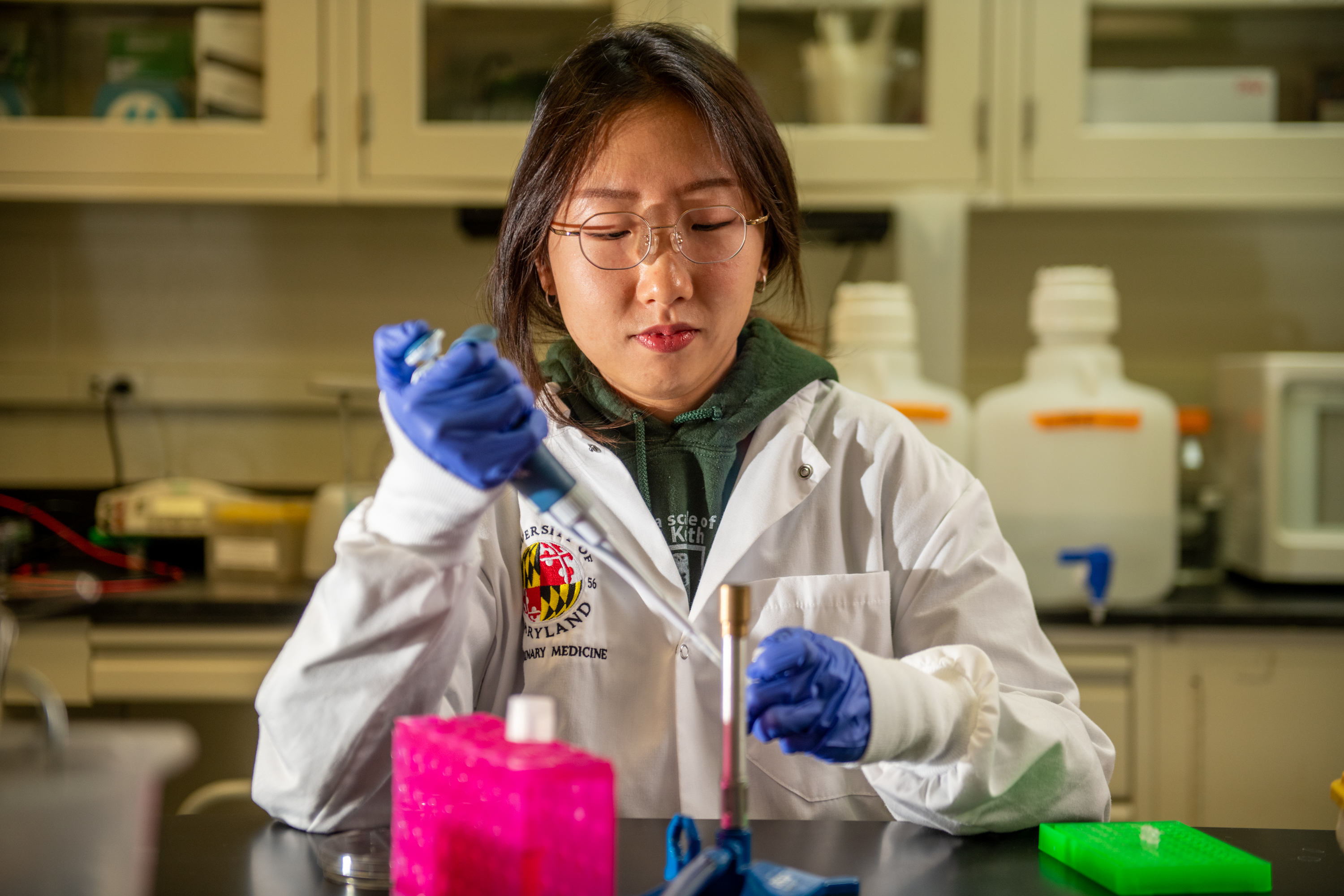
Through BioFIRE Zhu joined Cell Biology and Molecular Genetics Professor Jonathan Dinman’s FIRE stream, where she was mentored by then grad student-turned-postdoc Vivek Advani (Ph.D. ’15, cell biology and molecular genetics). Her work focused on how RNA viruses use special genetic signals to change the way they make their proteins, a step toward identifying new ways to block infections and develop vaccines.
“Cornelia stood out as very smart, highly engaged, inquisitive, and motivated,” Dinman said, noting that her work was crucial to the lab’s 2018 paper in the Journal of Biological Chemistry on the Chikungunya virus.
That motivation continued after the BioFIRE stream ended, when Zhu received a fellowship from the Howard Hughes Medical Institute (which she credits to learning to write strong proposals in her science courses and to help from Advani), allowing her to finish her project in Dinman’s lab as an undergraduate.
Onward and upward
Still fascinated by the tug of war between pathogens and immunity, Zhu decided to stay at UMD for her Ph.D. and began working with Associate Professor Sean Riley, then a new faculty member in the Department of Veterinary Medicine, to study how a bacterium called Rickettsia tricks and manipulates mammalian host cells to establish its intracellular niche.
“Rickettsia is actually a lot like a virus—it has these unusual properties that made it sort of something in between viruses and bacteria,” Zhu said. “It was a real challenge to work with it, and I loved it.”
Now an author on seven published papers, Zhu is seeking a postdoctoral position for after she graduates this spring. She looks back on BioFIRE as a time-consuming but crucial steppingstone on her path to her Ph.D.
“We learned how to read and cite scientific papers, how to write literature reviews and proposals, how to set up experiments, how to do the hands-on work—so many important things,” she said. “Critical thinking skills were drilled into us.”
Plus, the social aspect of BioFIRE was a highlight for Zhu, having given her a peer group that helped her build confidence.
That confidence really stands out today, according to BioFIRE Director Kaci Thompson, assistant dean for science education initiatives.
"Not only is Cornelia a pioneer for being part of that first cohort, but she's truly grown into a self-assured and accomplished scientist,” she said.
The doctor is in
Zhu stands ready to take on whatever comes next. And despite being the first from her BioFIRE cohort to complete a Ph.D., she remains humble.
“It’s still surreal to me that people can now address me as “doctor,” she said.
Her professors, including Dinman, are less surprised by her success. (No doubt her grandfather is, too.)
“Cornelia has all the right stuff: high intelligence, strong motivation, curiosity, work ethic and maturity,” Dinman said. “She has a bright future ahead of her.”